
Paral-Liner Parallel Straightedges

$171.00
24 reviews(24) Write Review Ask Questions

Paral-Liner Parallel Straightedges

In Stock & Ready To Ship!
Current Stock:Only left:
Description

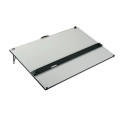
The Alvin Paral-Liner Parallel Straightedge is a professional top-mounted drafting bar designed for precise ruling, technical drawing, drafting, and layout work. Built for both drafting tables and portable drawing boards, the Paral-Liner combines smooth movement, durable construction, and accurate alignment for architects, engineers, designers, students, and technical illustrators.

The rigid phenolic straightedge features a black satin finish with elevated acrylic edges to help prevent ink smearing during use. Nylon rollers mounted within the blade provide smooth floating movement, while retractable rollers lock the blade securely in place for accurate drawing and alignment.

Important Sizing Information:
The drafting surface must be larger than the parallel bar being installed. A parallel straightedge cannot be mounted on a board or table that is shorter than the bar itself, even by a small amount.


Features

  • Professional quality top-mounted parallel straightedge
  • Rigid phenolic construction with black satin finish
  • Floating straightedge movement using nylon rollers mounted within the blade
  • Retractable rollers lock the blade securely for accurate drawing
  • Elevated acrylic edges help reduce ink smearing
  • Steel ball-bearing pulleys provide smooth movement
  • Compatible with drafting tables and portable drafting boards
  • All mounting hardware and installation instructions included
  • Available in 30", 36", 42", 48", and 60" sizes
  • Proudly made in Poland

Available Sizes

Model Size Recommended Table Size
30" Parallel Bar For tables and boards over 30" wide
36" Parallel Bar For tables and boards over 36" wide
42" Parallel Bar For tables and boards over 42" wide
48" Parallel Bar For tables and boards over 48" wide
60" Parallel Bar For tables and boards over 60" wide

Due to the laminar construction of the straightedge, the blade may bow slightly. This can typically be corrected by gently lifting the ends while applying light downward pressure to the center.


Frequently Asked Questions

What is a top-mounted parallel straightedge?
A top-mounted parallel straightedge uses wires that run along the top and sides of the drafting surface rather than underneath it. Most users find top-mounted bars smoother, easier to use, and easier to adjust than under-mounted systems.
Can this parallel bar be used on portable drafting boards?
Yes. The Alvin Paral-Liner can be installed on both portable drafting boards and full-size drafting tables as long as the board or table surface is larger than the selected bar size.
How do I choose the correct parallel bar size?
The drafting surface must be wider than the parallel bar itself. For example, a 42" parallel straightedge requires a drafting surface wider than 42". A bar cannot be mounted on a board or table that is the same size or smaller than the bar.
Does the Paral-Liner include mounting hardware?
Yes. The Alvin Paral-Liner includes mounting hardware and installation instructions.
Is this a professional-quality drafting straightedge?
Yes. The Alvin Paral-Liner is designed for professional drafting, technical drawing, engineering, architecture, and design applications while also remaining popular with students and schools.
Are replacement parts available?
Yes. Replacement hardware kits and rewiring kits are available for maintaining and repairing Alvin parallel straightedges.
Does this parallel straightedge work like the older Mayline bars?
Nothing fully matches the feel and construction of the older professional Mayline parallel bars, but the Alvin Paral-Liner is considered one of the closest currently available replacements for traditional professional drafting use.
Can the Alvin Paral-Liner be installed on a glass drafting table?
We do not recommend installing the Alvin Paral-Liner on glass drafting table tops. Installation requires mounting hardware and drilling into the work surface, which is generally not practical or recommended for glass tops.