Manual Drafting Tools for Architects: Essential Supplies for Hand Drafting
Learn which manual drafting tools architects and architecture students use, including scales, triangles, compasses, templates, drafting pencils, vellum, drafting tables, portable drafting boards, and other hand drafting essentials.
Manual drafting remains an important part of architectural training, sketch development, and traditional design practice. Even though digital tools now handle much of the production work, many architects, students, and designers still value the clarity, control, and tactile feel of drawing by hand.
Hand drafting teaches careful thinking. It helps students understand scale, line weight, proportion, and how drawings are built before the computer cleans everything up. It also relies on a specific set of tools, from basic scales and triangles to drafting boards, templates, pencils, pens, and specialty papers.
This guide covers the manual drafting tools architects and architecture students still use, what each tool does, and where it fits into a traditional drafting workflow.
The Five Drafting Tools Almost Every Architecture Student Needs
After assembling drafting kits for architecture students across the country, we have found that most schools require some variation of the same core tools.
- Architect Scale – Used to read and create scaled architectural drawings.
- Drafting Triangles – Essential for creating accurate angles, verticals, and perpendicular lines.
- Pencil – Whether it is a mechanical pencil, lead holder, or traditional woodcase pencil, every drafting setup starts here.
- Compass – Used for circles, arcs, and layout work.
- Erasing Shield – One of the most overlooked drafting tools, but invaluable for making precise corrections without disturbing nearby linework.
Different schools may add templates, vellum, technical pens, portable drafting boards, or other specialty supplies, but these five tools appear on architecture supply lists year after year.
Why Manual Drafting Still Matters
Manual drafting is more than a nostalgic holdover. It still helps students and professionals develop spatial thinking, line control, layout discipline, and a better understanding of how drawings are put together.
- Strengthens drawing fundamentals
- Supports concept development and sketch refinement
- Builds understanding of scale, proportion, and line hierarchy
- Creates a direct, hands-on design process
Drawing Instruments
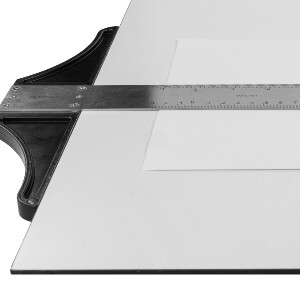
T-Square
A T-square is one of the classic tools of manual drafting. It is used for drawing straight horizontal lines and serves as a guide for triangles.
T-squares are still useful on plain drafting boards, although many students now use portable drafting boards with built-in parallel bars instead.
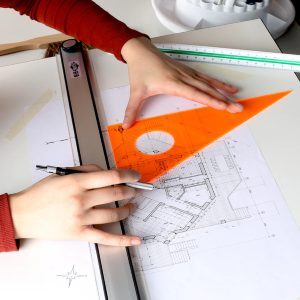
Triangles
Triangles are used to create accurate vertical lines, angles, and perpendiculars. Most architecture students use both a 45° triangle and a 30°/60° triangle.
Adjustable triangles are also available and allow users to create custom angles without switching between multiple drafting tools.
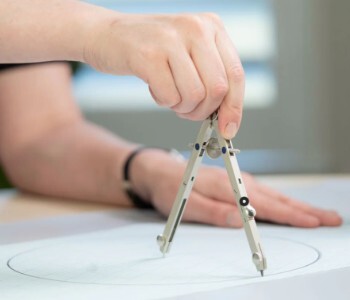
Compass
A compass is used for drawing circles and arcs with precision. It is simple, but still one of the tools most often found on architecture and drafting supply lists.
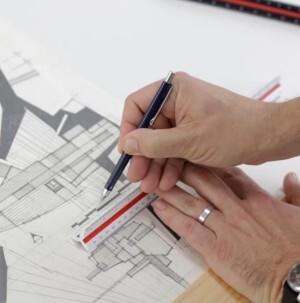
Architect Scale Ruler
Architect scales help convert real-world dimensions into scaled drawings. They remain one of the most important tools in architecture school and professional practice.
For students, plastic architect scales are the most common choice because they are affordable and frequently included in drafting kits. Architects looking for a scale for long-term professional use often choose aluminum or color-coded scales for improved durability and readability.
Architectural Templates
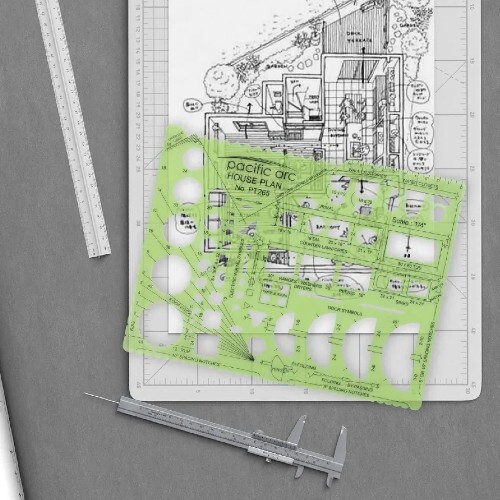
Architectural Symbol Templates
Architectural templates help users draw standardized symbols such as doors, windows, stairs, fixtures, and furniture more quickly and consistently.
Templates are especially helpful for students because they keep early drawings cleaner while they are still learning layout and line control.
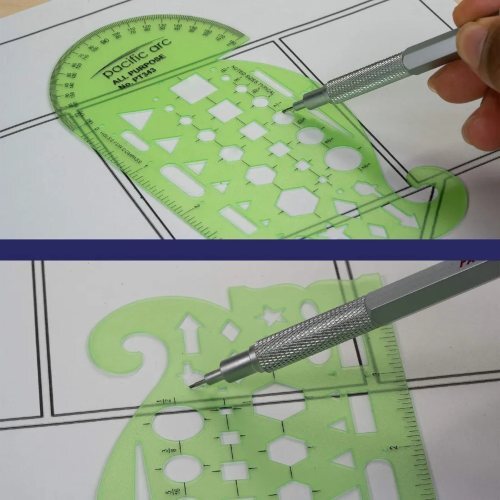
Basic Geometric Shape Templates
General-purpose templates are useful for drawing circles, squares, rectangles, and other common shapes that appear in architectural and technical drawings.
Technical Pens and Drafting Pencils
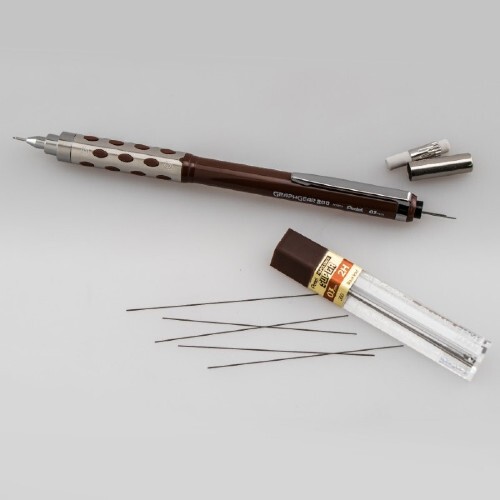
Mechanical Pencils
Mechanical pencils give architects clean, controlled line work and are a standard choice for detail drafting, layout work, and sketching.
Many students start with a 0.5mm mechanical pencil, although 0.7mm pencils and 2mm lead holders remain popular for sketching, layout work, and heavier line weights.
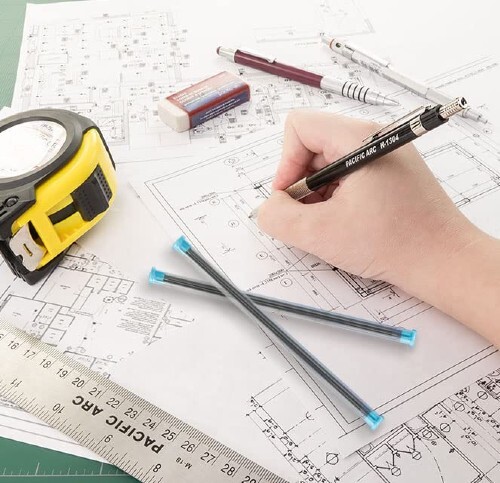
2mm Lead Holder
A 2mm lead holder offers a slightly more traditional drafting feel with a thicker refillable lead. It works well for drafting, sketching, and controlled hand drawing.
Some schools specify mechanical pencils, some prefer lead holders, and some allow either. The right choice often depends on the instructor and the type of drawing being taught.
Inking Pens
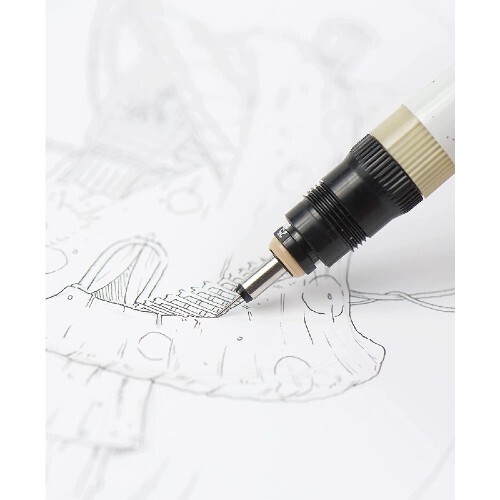
Technical and inking pens are used for crisp, permanent lines in presentation drawings and reproducible work. They remain a classic tool for architects who value ink drafting techniques.
Not every architecture program requires technical pens today, but they are still useful for finished line work, presentation drawings, and traditional drafting practice.
Non-Photo Blue Pencils
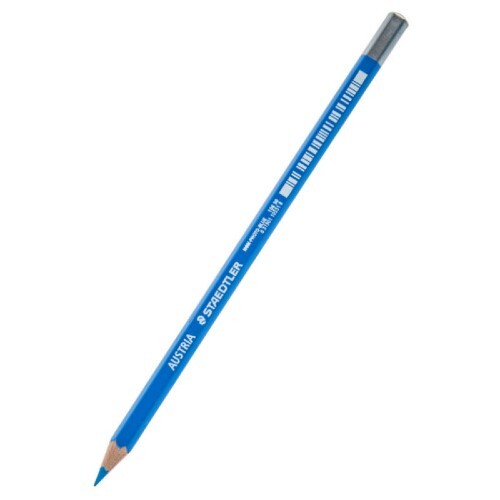
Non-photo blue pencils are often used for preliminary sketching and layout because the blue marks are less likely to appear in reproduction and scanning workflows.
Mechanical Pencil, Lead Holder, or Woodcase Pencil?
Architecture students often ask which type of pencil is best. The honest answer is that all three can be useful.
- Mechanical Pencils: Consistent line width and no sharpening.
- Lead Holders: Popular for sketching, drafting, and heavier line weights.
- Woodcase Pencils: Traditional feel and easy shading.
Most architecture programs allow one or more of these options, which is why drafting kits can vary from school to school.
Drafting Paper and Pads
Tracing Paper
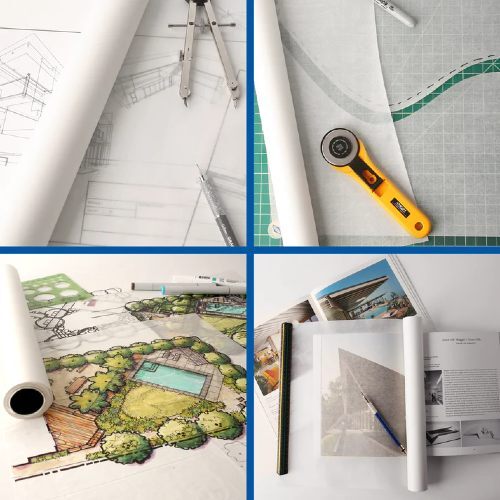
Tracing paper, sometimes called onion skin, is useful for overlays, concept refinement, and exploring alternate design ideas without committing to a final line too early.
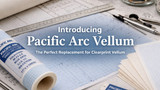
Vellum
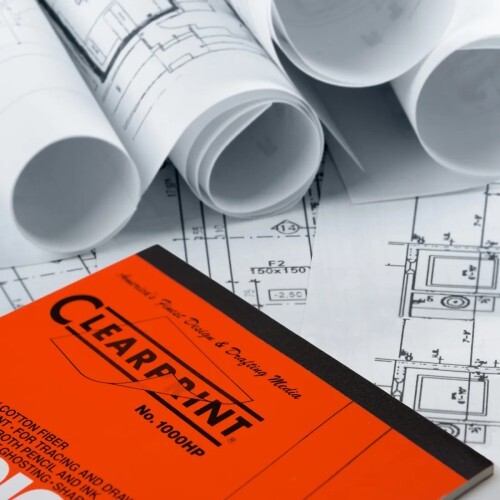
Drafting vellum offers a smooth, durable surface with excellent contrast for line work. It is often used for more finished drawings and presentation-quality hand drafting.
Erasers and Correction Tools

Vinyl Erasers
Vinyl erasers remove pencil lines cleanly without being too harsh on the paper, which makes them a dependable tool for corrections and line cleanup.
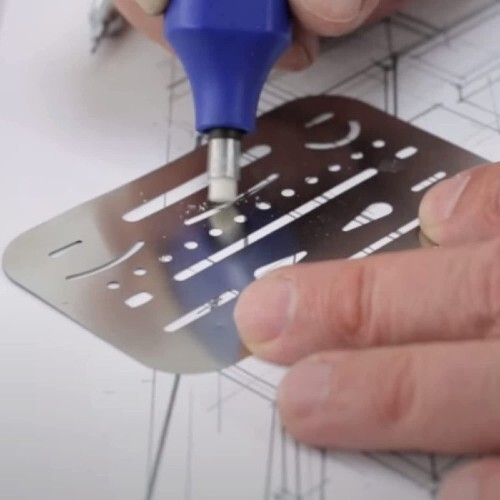
Erasing Shield
An erasing shield helps isolate small areas of a drawing so only the intended marks are removed. It may not look like much, but it is one of the most commonly required tools in architecture and drafting programs because it allows precise corrections without affecting nearby linework.
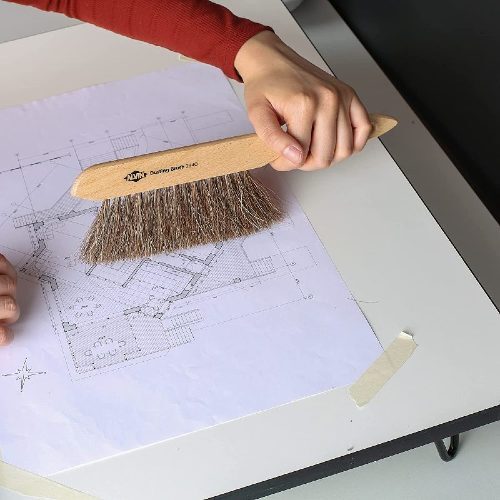
Dusting Brush
A drafting brush helps clear away eraser crumbs and graphite dust without smudging the drawing surface with your hand. Tiny broom, very respectable job.
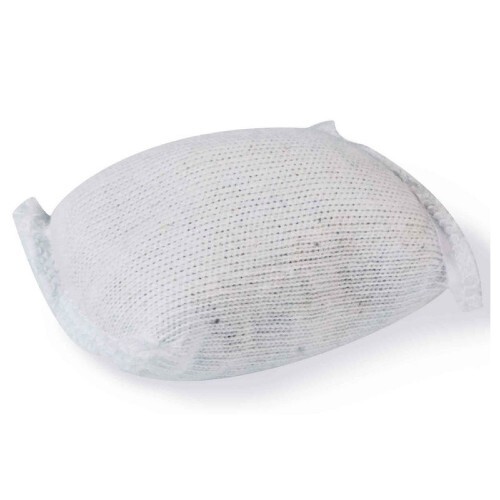
Drafting Cleaning Pad
Also known as a scum bag or blotter pad, this tool helps absorb moisture and reduce smudging while working on the drawing surface.
Drawing Boards and Drafting Table Accessories
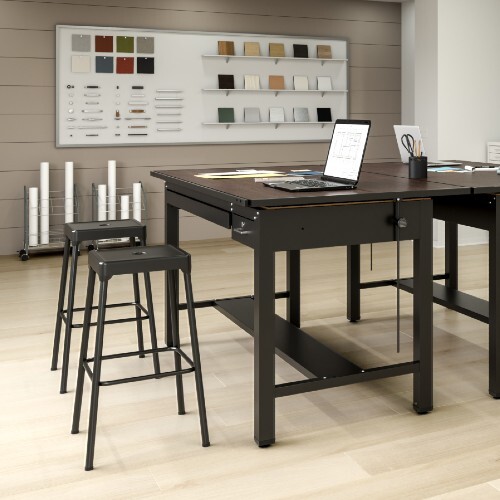
Drafting Table
A drafting table provides the primary work surface for manual drafting. Adjustable tops and stable frames help improve comfort and drawing accuracy during long work sessions.
While most architecture students now use portable drafting boards, drafting tables remain popular with architecture firms, universities, artists, and professionals who have a dedicated workspace.
For professional use, the Safco Mayline Ranger remains one of our favorite drafting tables because of its stability, durability, and large work surface.
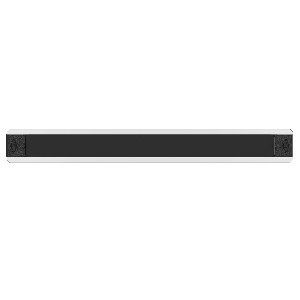
Parallel Bar or Straightedge
A parallel bar helps users draw consistent parallel lines across the board without resetting for every pass, which improves both speed and accuracy.
Many portable drafting boards include a straightedge or parallel bar, which is one reason they are so common in student setups.
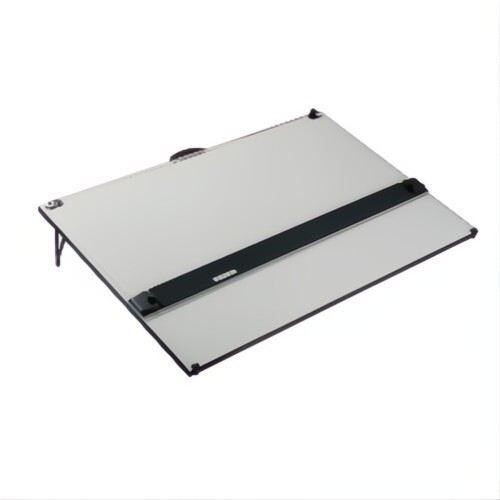
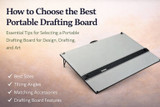
Portable Drafting Board
A portable drafting board makes it easier to work in different locations, whether in a classroom, studio, office, or home workspace.
Today, portable drafting boards have replaced drafting tables for many architecture students because they cost less, require less space, and can easily be transported between home and school.
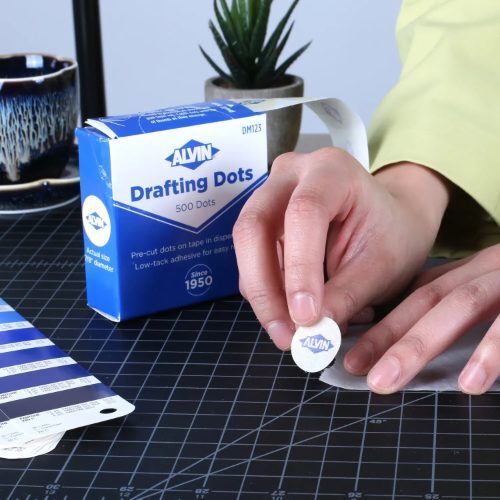
Drafting Tape and Dots
Drafting tape and dots are used to secure sheets, attach overlays, mask areas, and keep work in place without overly damaging the paper.
Building a Manual Drafting Setup
For Beginners
Start with the basics: scale, triangles, pencil, compass, erasing shield, tracing paper, and a reliable drawing surface.
For Architecture Students
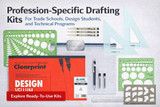
Add templates, vellum, drafting dots or tape, and either a portable drafting board or a board-and-T-square setup depending on the course requirements.
For More Advanced Users
Upgrade to better drafting tables, parallel bars, premium pens, specialty papers, and refined correction tools as your workflow becomes more specific.
Drafting Table or Portable Drafting Board?
Portable Drafting Board
- Most popular with architecture students
- Easier to transport
- Requires less space
- Lower cost than a full drafting table
Drafting Table
- Preferred by many professionals
- Larger work surface
- More stable setup
- Best for dedicated workspaces
Why Architects Still Value Hand Drafting Tools
Manual drafting remains useful because it combines technical discipline with direct physical engagement in the drawing process. Digital tools are powerful, but hand drafting still helps students understand scale, proportion, line hierarchy, and the discipline behind a finished drawing.
There is also something satisfying about the quiet logic of a good drafting setup. A straightedge, a scale, a sharp pencil, and a blank sheet still make a pretty convincing case for themselves.
Related Manual Drafting Resources
Shop Manual Drafting Supplies for Architects
From drafting tables and portable boards to templates, scales, pencils, pens, vellum, and correction tools, the right setup can make hand drafting more accurate, more efficient, and more enjoyable.