Why Vellum Is Still a Big Deal: A Slightly Nerdy Love Letter to Drafting’s Favorite Paper
What Is Drafting Vellum? Uses, Benefits, Brands, and How to Choose the Right Vellum Paper
Learn what drafting vellum is, why architects, engineers, designers, and students still use it, and how to choose the best vellum for drawing, tracing, overlays, grids, and title block work.
Drafting vellum has been a trusted drawing surface for architects, engineers, designers, and students for decades. Even in a world filled with CAD software, digital tablets, and 3D modeling, vellum remains a practical choice for tracing, overlays, concept sketches, title blocks, and technical drawings.
Its smooth surface, translucency, and durability make it useful for both hand drafting and certain printing applications. Whether you are working on classroom assignments, design development, or professional drawing sets, vellum continues to be one of the most dependable drafting papers available.
This guide explains what vellum is, how it compares to tracing paper and drafting film, which brands are popular, and how to choose the right format for your work.
What Is Drafting Vellum?
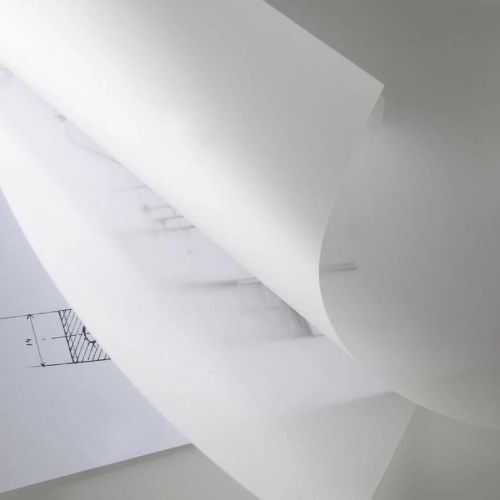
Modern drafting vellum is a high-quality translucent paper used for technical drawing, tracing, overlays, and presentation work. Unlike historic animal-skin vellum, today’s vellum is typically made from refined paper fibers designed to offer a smooth surface, good transparency, and better durability than ordinary paper.
It is widely used for pencil work, ink drawings, design overlays, and archival-quality documents. Because it allows underlying lines to show through, vellum is especially helpful when accuracy, layering, and revision work matter.
Why Choose Vellum Over Other Papers?
Excellent Translucency
Vellum is ideal for tracing, overlays, and layered design work where you need to see the drawing beneath the sheet.
Better Durability
Compared to lighter tracing papers, vellum stands up better to repeated erasing, revisions, and everyday handling.
Smooth Drawing Surface
Its surface works well for pencil, ink, and technical drawing applications that require crisp lines and controlled mark-making.
Archival Qualities
Many vellum papers are acid-free and designed for long-term storage, making them useful for drawings and documents that need to last.
Who Uses Drafting Vellum?
Drafting vellum is used across a wide range of creative, technical, and educational fields. It remains popular because it bridges the gap between rough sketching paper and more durable specialty drafting media.
- Architects: floor plans, elevations, sections, overlays, and presentation drawings
- Engineers: schematics, layout drawings, and precise technical revisions
- Interior designers: space planning, layered concepts, and scaled design work
- Industrial and product designers: concept sketches, form studies, and iterative drawing
- Artists and illustrators: clean line work, transfer drawings, and layered compositions
- Students: drafting classes, architecture programs, engineering programs, and design coursework
Popular Drafting Vellum Brands
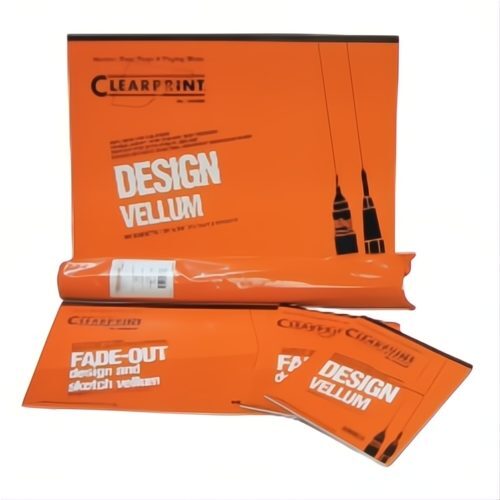
Clearprint
Clearprint is one of the best-known names in drafting vellum. It is widely used for architectural, engineering, and classroom work thanks to its smooth surface, reliable transparency, and strong reputation for quality.
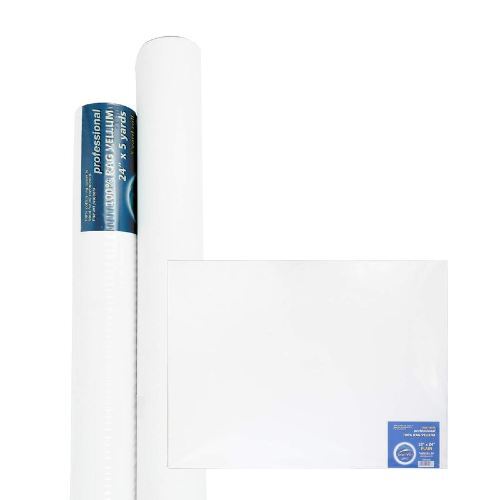
Pacific Arc
Pacific Arc vellum is a solid choice for students and professionals who want dependable performance and good value for everyday drafting and tracing work.
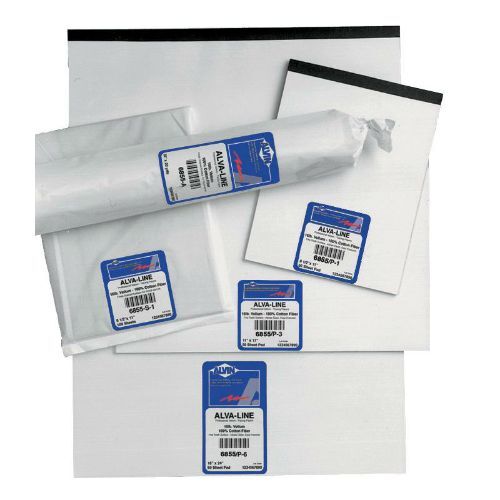
Alvin Drafting
Alvin has long been a trusted name in manual drafting supplies. Their vellum is often chosen for dependable studio, classroom, and professional use.
Canson
Canson vellum is a favorite for artists, designers, and students who want a drawing surface that feels comfortable under pencil while still offering useful translucency.
Choosing between brands often comes down to surface feel, weight, format, and how you plan to use the vellum.
For many buyers, the best choice is the one that matches the tools, size, and workflow they use most often.
Vellum Formats: Rolls, Pads, and Loose Sheets
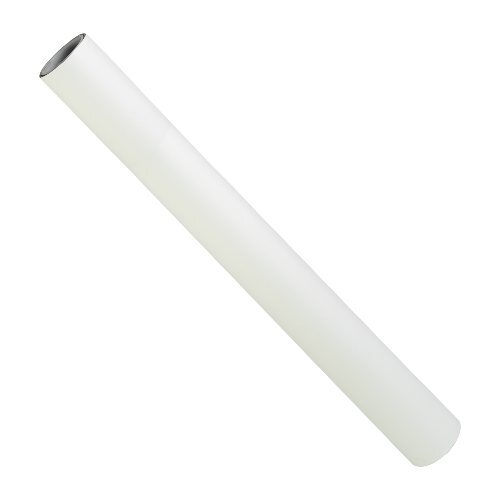
Vellum Rolls
Rolls are a practical option for large drawings, wide-format work, and users who need continuous material for oversized plans or plotting.
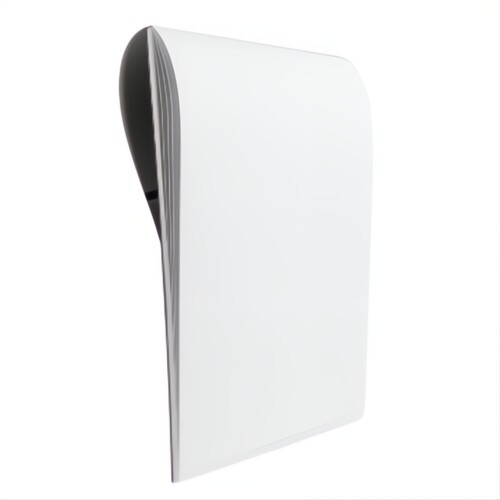
Vellum Pads
Pads are convenient for students, studios, and mobile users who want vellum that is organized, protected, and easy to store.
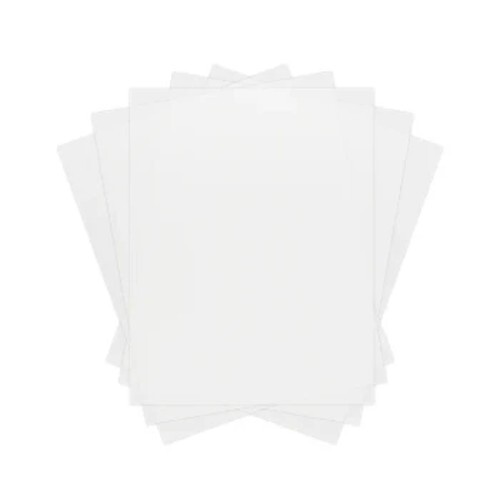
Loose Sheets
Loose sheets are ideal for printing, portfolio work, and users who need specific sizes ready to use one sheet at a time.
Can You Print on Vellum?
Some vellum papers are suitable for printing, but not every vellum sheet is designed for every printer type. Always check the product details before using vellum in an inkjet, laser printer, copier, or plotter.
Printer-friendly vellum can be useful for:
- Presentation overlays
- Title blocks
- Pattern transfers
- Design revisions
- Technical line work that combines digital and manual methods
Vellum vs. Tracing Paper
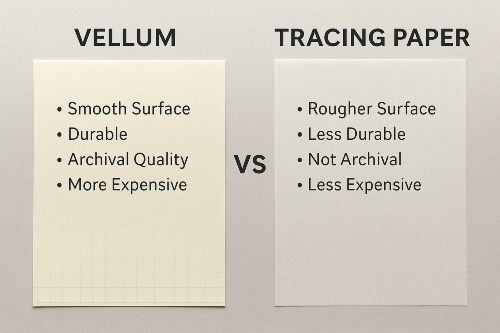
Vellum and tracing paper may look similar at first, but they are not the same material and they do not perform the same way.
- Durability: vellum is generally stronger and better for repeated use
- Surface quality: vellum usually offers a smoother drawing experience
- Line clarity: vellum tends to produce cleaner, crisper results
- Longevity: vellum is often a better choice for long-term storage
- Cost: tracing paper is often less expensive, but usually less durable
If you need a more durable and professional drawing surface, vellum is often the better choice.
How to Store and Care for Drafting Vellum
Store Flat When Possible
Flat storage helps reduce curling and keeps sheets easier to work with.
Avoid Excess Humidity
Moisture can affect how vellum handles, stores, and feeds through equipment.
Use Clean Hands
Keeping oils and dirt off the sheet helps maintain a clean drawing surface.
Grid Vellum and Title Block Vellum
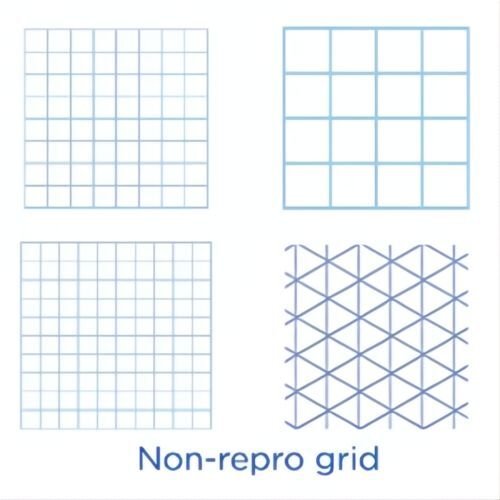
Grid Vellum
Grid vellum helps with alignment, spacing, scaling, and layout accuracy. It is especially useful in architecture, engineering, interior design, and product design where consistent spacing matters.
- 4x4 grid: commonly used in architecture and design programs
- 5x5 grid: often useful for engineering and technical work
- 8x8 and 10x10 grids: suitable for more detailed and highly technical drawing applications
- Isometric grids: helpful for 3D-style sketches and product design concepts
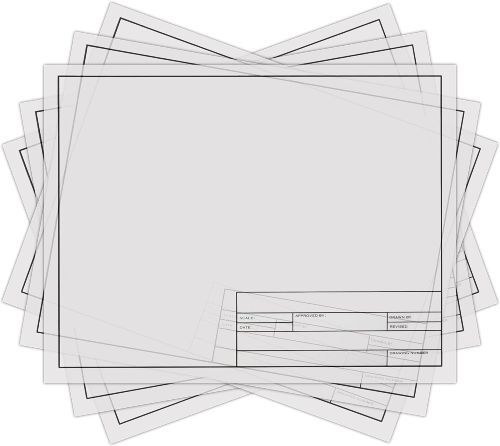
Title Block Vellum
Title block vellum includes a pre-printed information area that helps organize drawings and identify key project details. It is useful for schools, offices, and professionals who want a more consistent presentation format.
Typical title block information may include:
- Project name
- Drafter or designer name
- Date
- Scale
- Sheet number
- Revision details
When to Use Drafting Film Instead of Vellum
When you need more strength and dimensional stability than paper-based vellum can provide, drafting film may be the better option. Drafting film is a polyester-based translucent material that resists tearing, moisture, and warping better than vellum.
Drafting film is often the better choice when:
- Long-term durability is critical
- Drawings will be heavily handled in the field
- You need a very stable surface for precise ink or pencil work
- You want a more tear-resistant archival medium
Why Drafting Vellum Still Matters
Drafting vellum is still relevant because it offers something many digital tools do not: a simple, reliable, tactile surface for thinking through ideas, refining layouts, tracing revisions, and building technical drawings by hand. It remains a favorite in studios, classrooms, and professional settings because it works.
For many architects, engineers, designers, and students, vellum is not outdated. It is still one of the most practical papers for precise drawing and technical presentation.
Shop Drafting Vellum Paper
At Drafting Equipment Warehouse, we carry drafting vellum for architects, engineers, designers, students, and schools in a variety of sizes, formats, and trusted brands.
Browse our full selection of drafting vellum paper
Drafting Tips, Guides & Resources