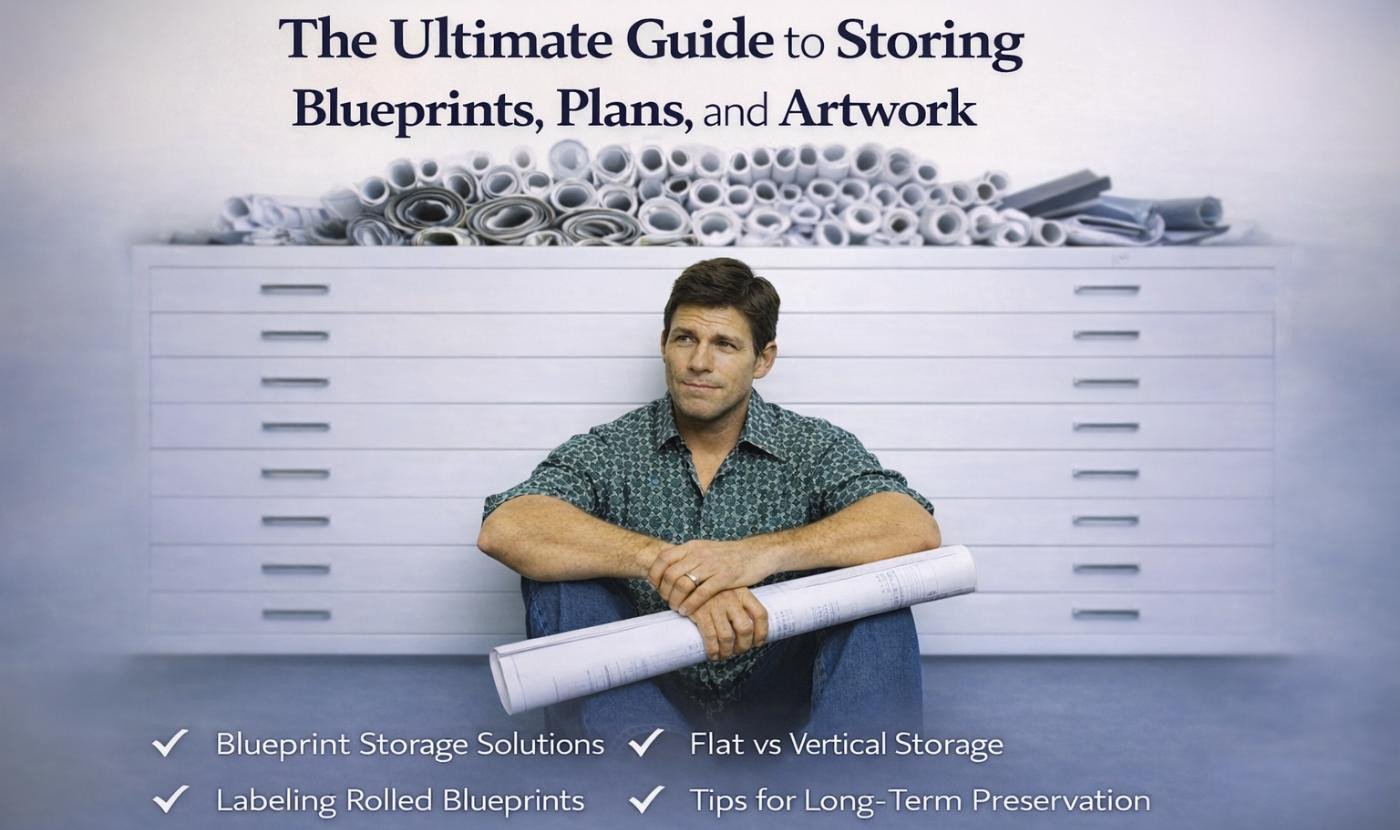
The Ultimate Guide to Storing Blueprints, Plans, and Artwork
Updated: June 22, 2026
Learn the best ways to store blueprints, engineering plans, maps, posters, and artwork with flat files, rolled storage, hanging clamps, vertical plan files, identification tags, and large document folders.
Proper storage is one of the easiest ways to protect blueprints, plans, maps, posters, and artwork from damage over time. The right storage method can help prevent creases, curling, dust exposure, and general wear while also making documents easier to organize and retrieve.
Different storage solutions work better for different needs. Some users need flat storage for long-term preservation. Others need quick access to active drawings, more compact storage for rolled plans, or a high-capacity filing system for large document collections.
This guide explains several common storage options for blueprints, plans, and artwork, who uses them, what they are best for, and how to decide which solution may work best for your space and workflow.
Our Recommendation
After helping architects, engineers, schools, government agencies, construction companies, and design professionals store drawings for more than 30 years, we usually recommend flat file storage whenever space and budget allow.
Flat files keep drawings organized, easy to access, and protected from folding, creasing, curling, and edge damage. For most customers, the biggest mistake is simply purchasing a storage solution that is too small for their largest sheet size.
The most popular flat file size we sell is 24" x 36", but before purchasing any storage system, measure the largest plans, drawings, artwork, or maps you need to store. When in doubt, choose the storage method around the document size first, then the room size second.
For flat file storage, we most often recommend Safco Professional Flat Files because they offer a strong combination of durability, accessibility, and long-term document protection.
Why Proper Blueprint and Artwork Storage Matters
Large-format documents and artwork are more vulnerable than standard office papers. Improper storage can lead to bent corners, curled edges, tears, fading, and harder retrieval later on.
- Protects drawings, prints, and plans from creasing and surface damage
- Improves organization and retrieval
- Helps preserve materials for long-term storage
- Makes active project files easier to manage
Blueprint Storage Comparison
| Storage Method | Best For | Access | DEW Notes |
|---|---|---|---|
| Flat Files | Long-term flat storage for plans, drawings, maps, and artwork | Fast | Our first recommendation when space and budget allow |
| Rolled Storage | Oversized plans, posters, and drawings that can be safely rolled | Moderate | More compact, but not ideal for documents that need to stay flat |
| Hanging Clamps | Active project drawings and job-site plans | Fast | Most useful for construction and active project storage |
| Vertical Plan Files | High-capacity plan storage in a smaller footprint | Fast | A strong option when drawer-style flat files take up too much room |
| Large Folders | Organizing groups of plans inside flat files or vertical files | Fast | Helpful for keeping projects, departments, or collections separated |
1. Flat Files
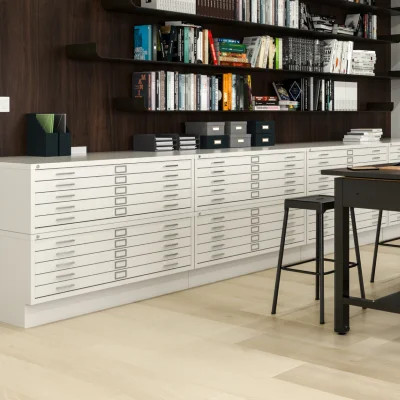
Flat files are one of the best storage choices for documents and artwork that should remain flat. Their shallow drawers are designed to hold large sheets without folding or rolling, which helps preserve condition over time.
For most customers, this is still our preferred solution for blueprint storage. Flat files make drawings easier to organize and retrieve while helping prevent curling, folding, bent corners, and edge damage.
Best for:
- Architectural blueprints
- Engineering plans
- Drawings, prints, and photographs
- Historical documents and maps
Common users:
- Architects and engineers
- Artists and collectors
- Archivists and librarians
- Schools and universities
Flat files are ideal when preserving the original condition of the material matters most. We most often recommend Safco Professional Flat Files for customers who want dependable long-term flat storage.
Choosing the Right Flat File Size
One of the most common questions we receive is, "What size flat file do I need?"
The answer depends on the largest document you plan to store. A flat file should always be larger than your largest sheet size. The most common mistake is buying a file that is too small, then discovering that a plan set, map, or piece of artwork does not fit properly in the drawer.
- 24" x 36" – Our most popular size and a common choice for architectural drawings, construction plans, and large-format artwork.
- 30" x 42" – A good option for larger engineering drawings and plan sets.
- 36" x 48" – Often used for oversized plans, maps, artwork, and archival storage.
If you are between sizes, we generally recommend going larger. Running out of drawer space is much more frustrating than having a little extra room.
2. Rolled Storage
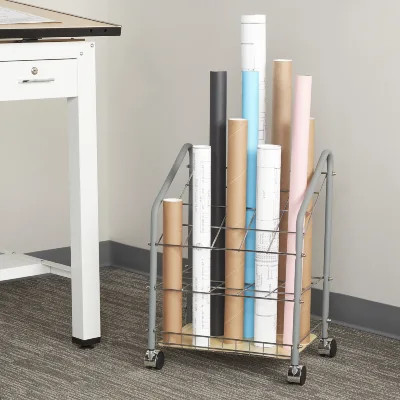
Rolled storage is a practical option for oversized plans, posters, canvases, and documents that need a more compact storage method. Plans are rolled and stored in tubes or dedicated compartments to save space and improve portability.
Rolled storage is not as common as it once was, and many rolled storage products have become more expensive over time. It still has a place, especially when plans need to be transported or when flat storage is not practical.
Best for:
- Large-scale blueprints and site plans
- Posters and banners
- Canvases and oversized prints
- Drawings stored in 35" long tubes
Common users:
- Artists and designers
- Contractors and builders
- Anyone transporting large documents regularly
Rolled storage is space-efficient, but it works best when the document can safely tolerate being rolled.
Flat File vs. Rolled Storage: Which Is Better?
If long-term preservation is your goal, flat files are usually the better choice because documents remain flat, organized, and protected from curling. Rolled storage is usually better when space is limited, documents need to be transported, or the material can safely be rolled without damage.
For active offices, the best answer may be a mix of both: flat files for important original drawings and rolled storage for transport, temporary storage, or oversized materials.
3. Hanging Clamps and Racks
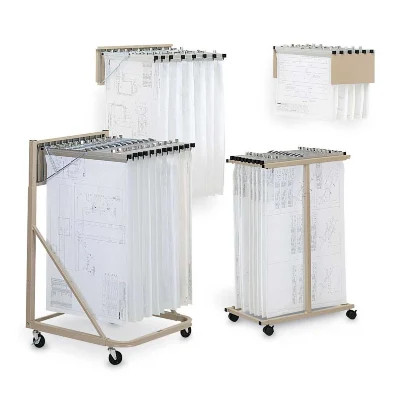
Hanging clamps secure large documents along one edge and allow them to be stored vertically on a rack or wall-mounted system. This setup keeps active drawings organized and easier to access than rolled storage.
We do not sell as many hanging clamp systems as we once did, but they are still useful for active project storage, especially in construction environments where plans need to be accessed and updated frequently.
Best for:
- Active blueprints and engineering drawings
- Large-format prints
- Technical plans used regularly
- Construction project drawings
Common users:
- Architectural and engineering firms
- Construction companies
- Print shops
Hanging clamps are a strong option when fast access matters and you want to avoid folding or loosely rolling documents.
4. High-Density Vertical Storage Cabinets
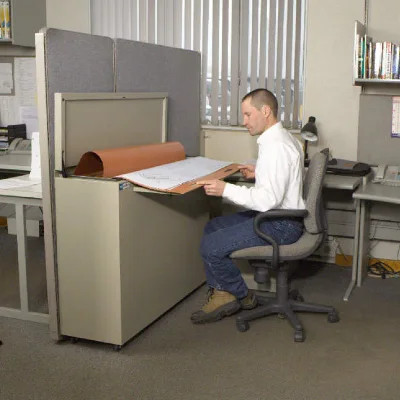
High-density vertical storage cabinets use upright compartments to store a large volume of documents in a relatively compact footprint. They are especially useful where floor space matters but storage demand is high.
If someone has a large quantity of blueprints and is not sure where to start, we usually look first at either flat files or Ulrich vertical plan files. Flat files are best when documents need to remain flat. Ulrich plan files are worth considering when capacity and floor space are the bigger concerns.
Best for:
- Blueprints and engineering plans
- Maps and posters
- Archival documents and records
- Large collections where space is limited
Common users:
- Corporate offices
- Government agencies
- Libraries and museums
- Facilities departments
Vertical plan files are a smart choice when you need large-capacity storage without dedicating the room required by wide flat-file layouts.
5. Labeling Rolled Blueprints
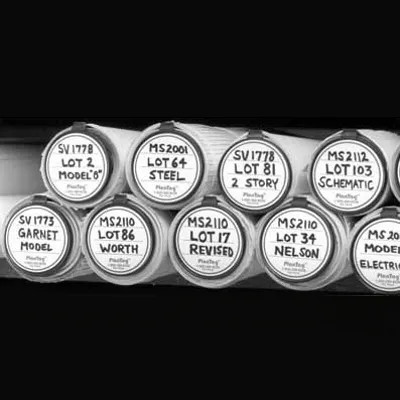
When blueprints and plans are stored rolled, labeling becomes much more important. Identification tags placed at the end of each roll make it easier to find specific documents without unrolling everything one by one.
Best for:
- Rolled blueprints
- Rolled site plans
- Rolled technical drawings
Why it helps:
- Speeds up retrieval
- Improves organization
- Reduces handling of stored documents
It is a simple system upgrade, but it can save a lot of time in busy offices and job site environments.
6. Extra-Large Folders for Large Documents
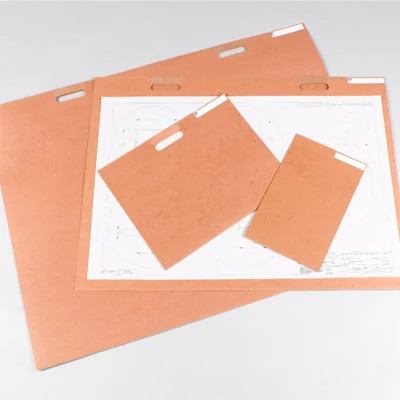
Extra-large folders help organize oversized documents inside flat files and vertical storage systems. They add another layer of protection while making it easier to sort projects, categories, or departments.
Best for:
- Large blueprints and engineering plans
- Oversized maps and posters
- Large-format artwork and prints
Common users:
- Architects and engineers
- Archivists and librarians
- Corporate records departments
These folders are especially useful for maintaining order inside larger filing systems where many documents need to stay grouped and protected.
Who Still Uses Blueprint Storage?
Although many drawings are now stored digitally, physical plan storage remains important in a surprising number of industries. Drawings still need to be reviewed, marked up, transported, archived, displayed, or protected depending on the workflow.
- Architecture firms
- Engineering offices
- Construction companies
- Government agencies
- Schools and universities
- Surveying firms
- Artists, designers, and collectors
Construction companies remain one of the most common users of hanging plan clamp systems because active project drawings can be organized, accessed, and updated quickly.
We have also seen customers use flat files for much more than blueprints over the years, including artwork collections, stamp collections, maps, rock and mineral collections, and other flat items that need organized protection.
A Note About Mayline and Hamilton Flat Files
For many years, Mayline and Hamilton were familiar names in blueprint storage and flat files. Those brands have been gone from the flat file market for many years, but older cabinets are still in use in offices, schools, and studios.
Today, when customers ask us for professional flat file storage, we most often recommend Safco Professional Flat Files as the current replacement for many traditional blueprint storage needs.
How to Choose the Right Storage Method
Choose Flat Files If...
You need long-term protection for documents or artwork that should stay flat and uncreased.
Choose Rolled Storage If...
You need a compact, transport-friendly option for large plans, posters, or prints.
Choose Hanging Clamps If...
You want quick access to active project drawings without loosely stacking or rolling them.
Choose Vertical Storage Cabinets If...
You need high-capacity storage in a smaller footprint for many large documents.
A Smarter Storage Setup Saves Time and Protects Your Work
The right storage system depends on the size of your collection, how often you access documents, how much space you have, and whether long-term preservation is the top priority. In some offices, one storage method is enough. In others, a mix of flat files, rolled storage, clamps, tags, and folders works best.
The goal is not just storing blueprints, plans, and artwork. It is keeping them protected, organized, and ready when you need them.
Shop Blueprint and Large Document Storage Solutions
From flat files and rolled storage to hanging clamps, vertical plan files, identification tags, and large document folders, the right storage setup can help protect valuable materials and improve day-to-day organization.
Choose a storage system that fits your space, your workflow, and the kinds of documents you need to preserve.