Drafting Scales Guide: Types of Scale Rulers, How to Use Them, and How to Choose the Right One
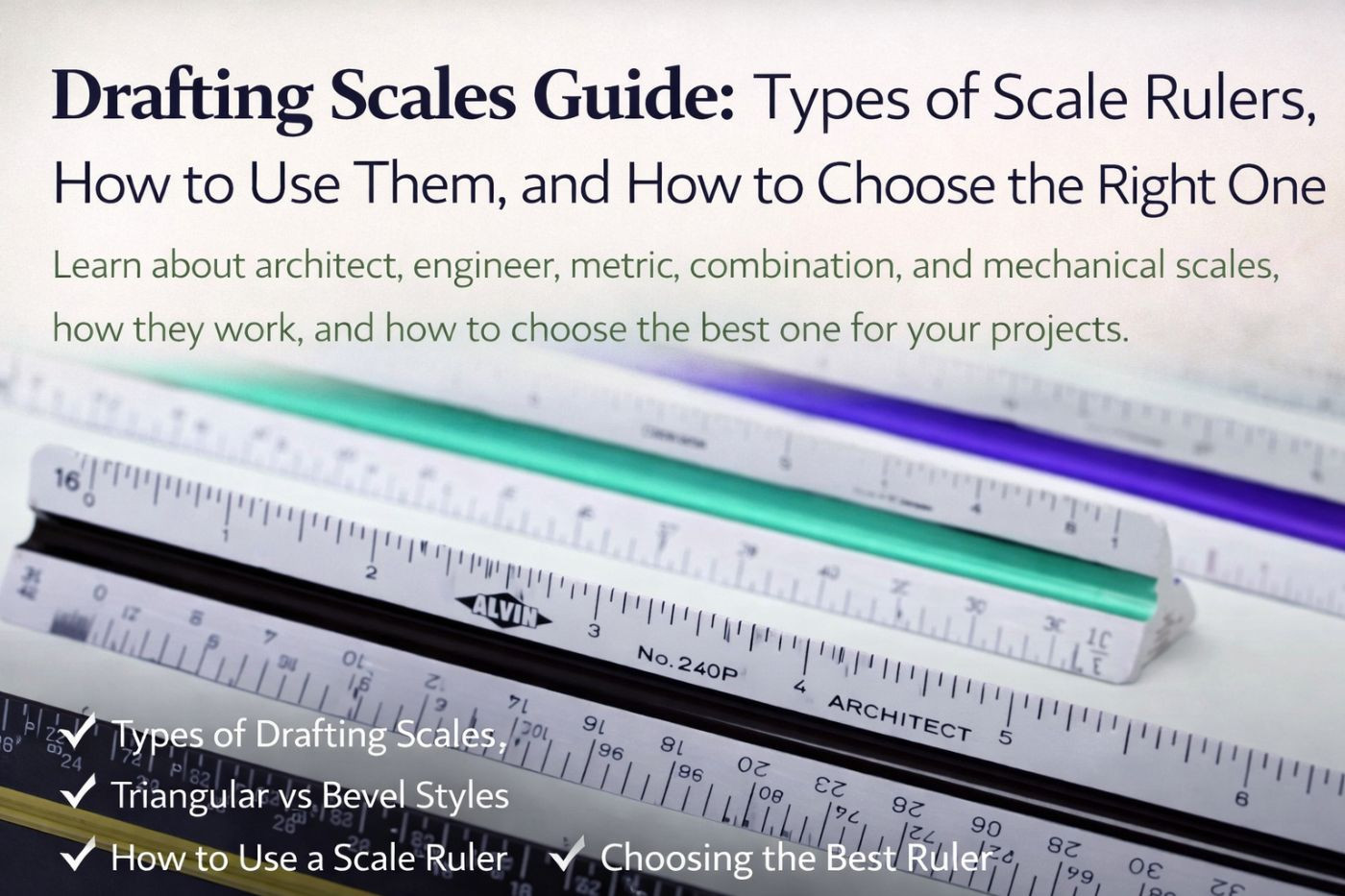
Drafting Scales Guide
Updated: June 22, 2026
Learn what drafting scales are, the differences between architect, engineer, metric, combination, and mechanical scales, how to use a scale ruler, and how to choose the best drafting scale for your work.
When it comes to drafting, accuracy matters. Whether you are working in architecture, engineering, design, or technical illustration, the scale you choose affects how real-world dimensions are represented on the page. A good drafting scale helps you measure clearly, draw accurately, and keep proportions consistent from start to finish.
With so many types of scale rulers available, choosing the right one can feel a little confusing at first. Architect scales, engineer scales, metric scales, combination scales, triangular scales, bevel scales, and fan scales all serve different purposes, and the best choice depends on the kind of work you do most often.
This guide explains the main types of drafting scales, how scale rulers work, how to use them effectively, and what to look for when choosing the right one for your projects. We also included a few of the scale rulers our customers buy most often, from student architectural and engineering scales to aluminum scales for long-term professional use.
Quick Recommendations
- Architecture students: Alvin 110P 12" Plastic Architectural Scale
- Engineering students: Alvin 111P 12" Plastic Engineering Scale
- Professional architects: Pacific Arc 95120 12" Color-Coded Plastic Architect Scale
- Pocket architectural scale: Alvin 310A 6" Architectural Scale
- Pocket engineer scale: Alvin 31ATS 4" Mini Aluminum Engineer Triangular Scale
- Long-term use: Aluminum scales are usually our recommendation because they hold up better over time.
What Is a Drafting Scale?
A drafting scale is a specialized ruler used to convert real-world dimensions into scaled measurements for drawings. Instead of measuring objects at full size, scale rulers allow architects, engineers, and designers to represent large spaces or detailed parts accurately on a much smaller surface.
This is especially important for floor plans, site plans, elevations, engineering drawings, technical illustrations, and mechanical work where proportion and precision need to stay consistent throughout the drawing.
In simple terms, a drafting scale helps you shrink reality down to paper without losing the math along the way.
Why scale rulers matter:
- Maintain accurate proportion
- Translate real measurements to drawing size
- Help standardize technical drawings
- Reduce measurement errors
Types of Drafting Scales
Different types of drafting scales are designed for different disciplines and measurement systems. Choosing the right type starts with knowing what kind of drawings you create most often.
Architectural Scale
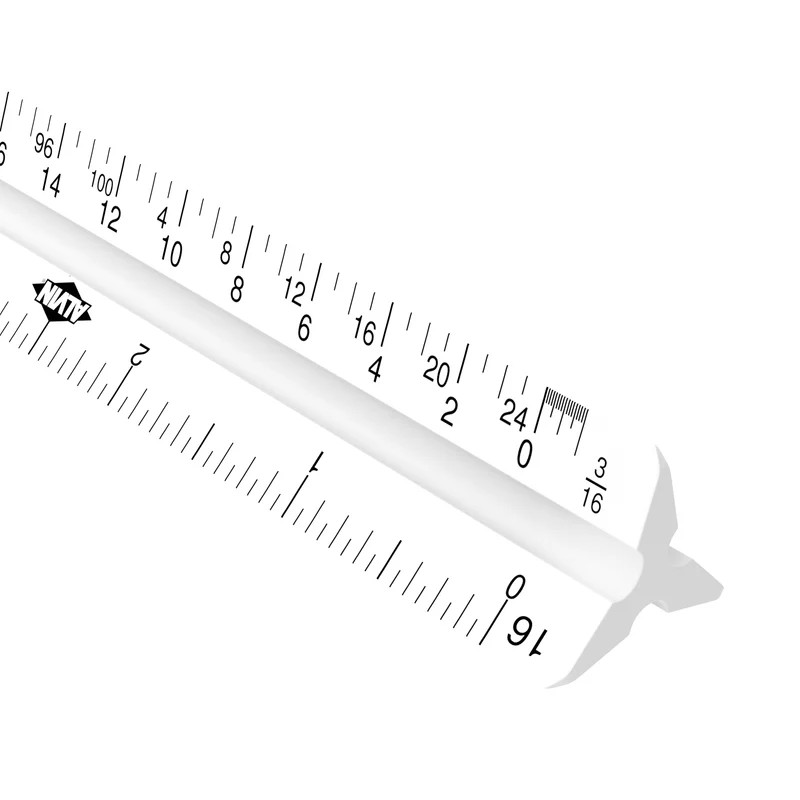
Architect scales are used for buildings, floor plans, and structural drawings. Common architectural scales include 1/4" = 1'-0" and 1/8" = 1'-0". Architect scales are the scales we sell most often, especially for architecture and interior design students.
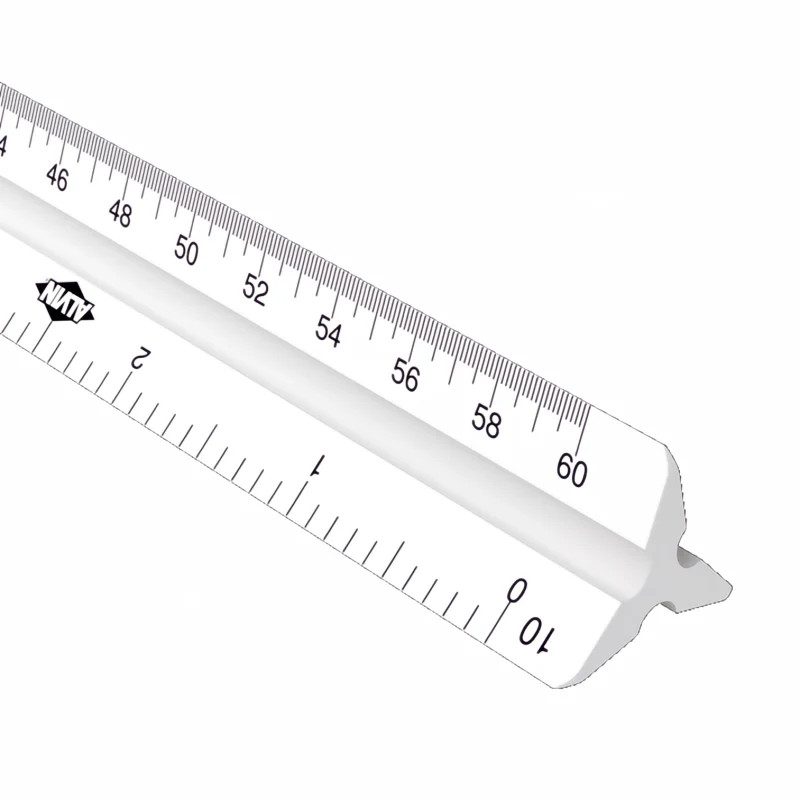
Engineering Scale
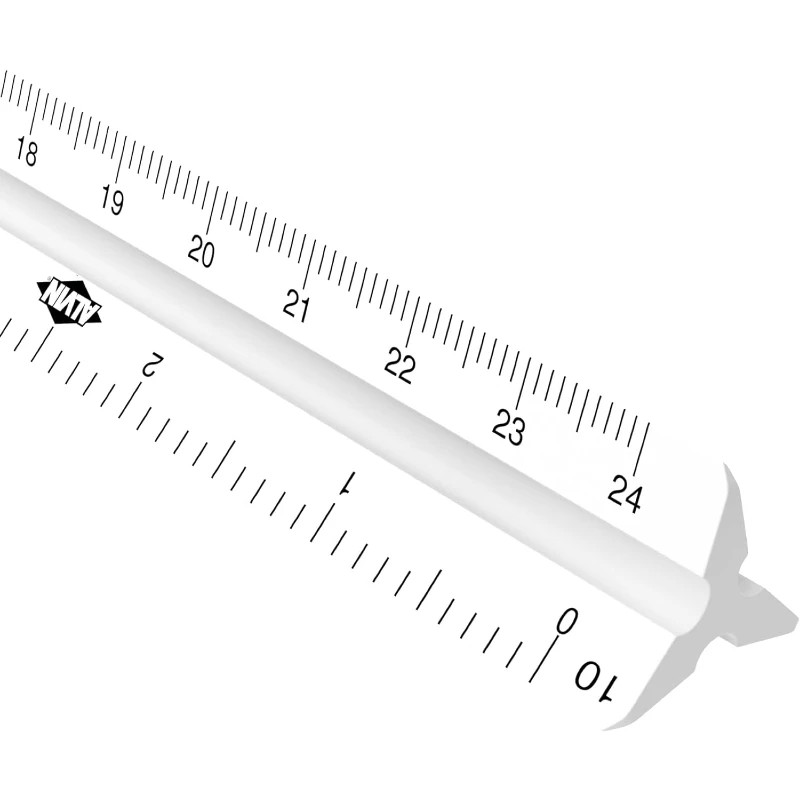
Engineer scales are commonly used for civil engineering, site work, and drawings based on decimal feet or inches. Common scales include 1" = 10' and 1" = 50'. Students often buy the Alvin 111P as the engineering version of the standard student scale.
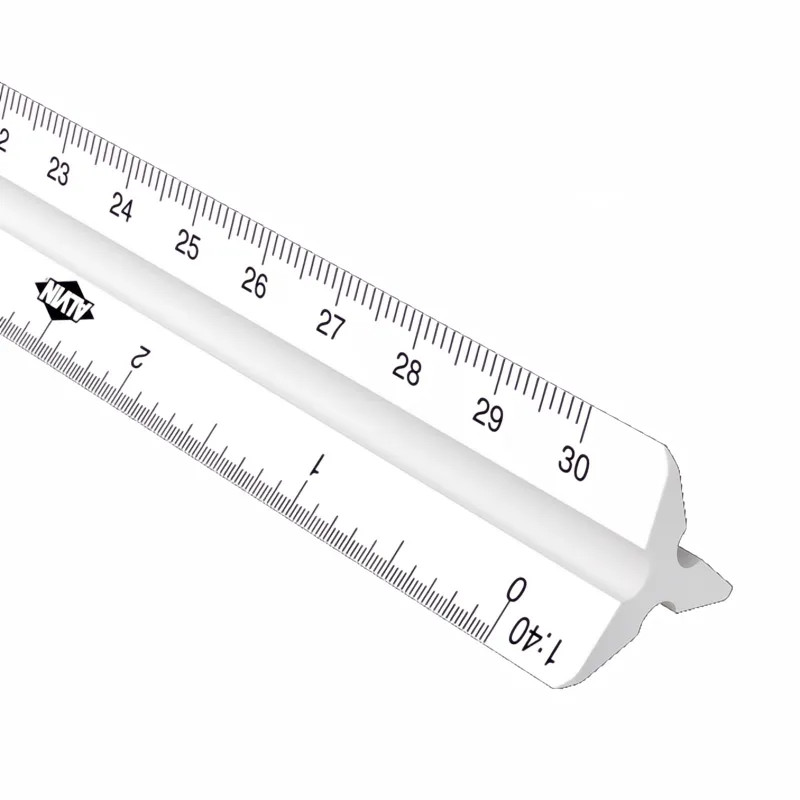
Metric Scale
Metric scales are commonly used in scientific, technical, and international drafting work, with ratios such as 1:100, 1:50, and 1:25.
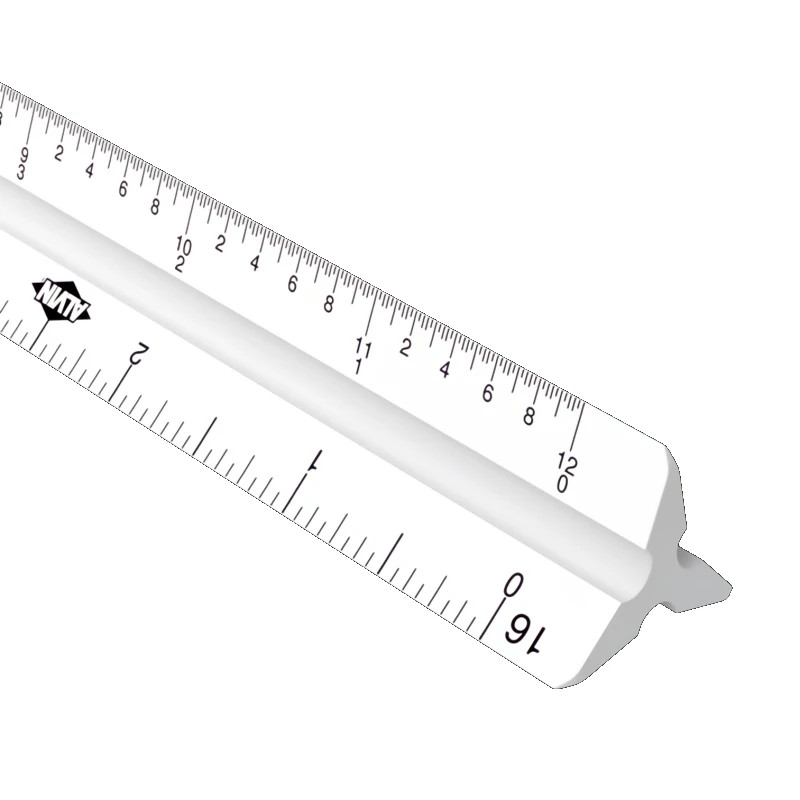
Combination Scale
Combination scales include more than one measurement system on the same ruler, making them useful for users who work across disciplines or need extra flexibility.
Mechanical Drafting Scale
Mechanical scales are used for technical and mechanical drawings where smaller ratios and precise detail work are more common, such as 1:20 and 1:50.
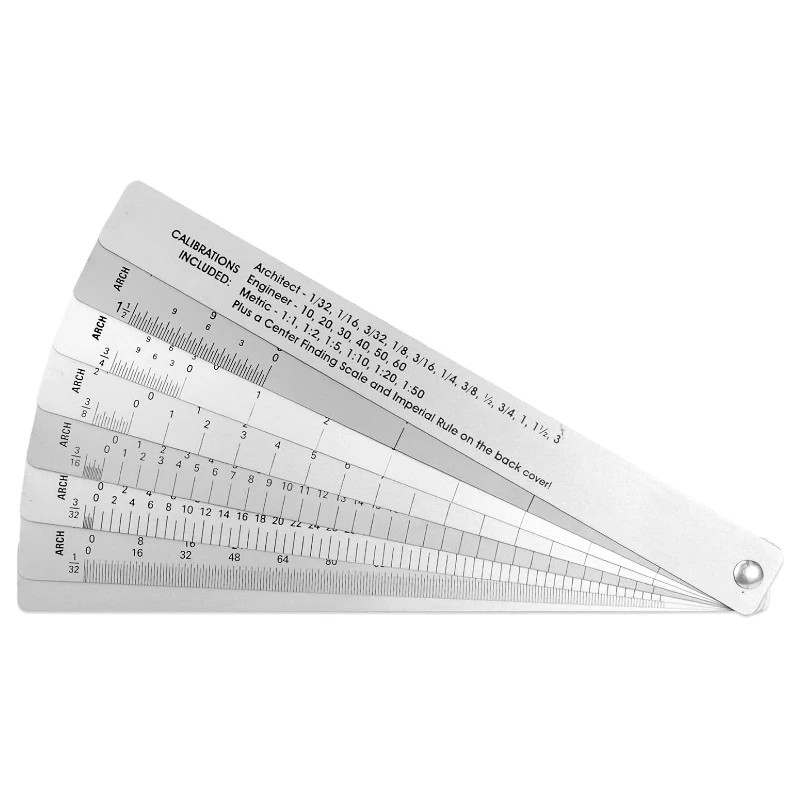
Drafting Fan Scale
A drafting fan combines multiple common scales in one compact aluminum tool, making it convenient for users who want several options in a portable format.
How to Choose the Right Scale Ruler
The best drafting scale depends on the kind of work you do, the drawing size you use, and the measurement system required for the project.
Project Type
Architecture projects typically call for architect scales, while engineering work usually requires engineer scales. Mechanical and metric drawings need their own scale types as well.
Drawing Size
Choose a scale that allows the full design to fit on the page while still leaving room for the level of detail you need.
Industry Standards
Always check the standards used in your field, class, office, or project. Some scales are much more common in certain industries than others.
Helpful rule of thumb: choose the scale type first, then choose the exact graduations you use most often. That keeps the decision from turning into ruler roulette.
What Scale Do Most Students Buy?
For architecture students, one of the most common scale rulers is the Alvin 110P 12" Plastic Architectural Scale. It is affordable, lightweight, and commonly included in drafting and architecture supply kits.
For engineering students, the matching student option is the Alvin 111P 12" Plastic Engineering Scale.
Many students purchase an architect scale and an engineer scale separately. Some choose a combination scale when they need multiple systems in one ruler, but separate scales are still very common for school supply lists.
Student scale tip:
If your instructor lists both an architect scale and an engineer scale, buy both unless the supply list specifically allows a combination scale.
Plastic vs. Aluminum Drafting Scales
| Plastic Scales | Aluminum Scales |
|---|---|
| Lower cost | Longer lasting |
| Popular with students | Popular with professionals |
| Lightweight and easy to carry | More durable for everyday use |
| Good for drafting kits and classroom use | Better for long-term office, studio, and field use |
If you are purchasing your first scale for a drafting class, a plastic scale is usually sufficient. If you expect to use the scale professionally for years, we generally recommend aluminum.
What Scale Do Professionals Use?
For long-term professional use, we generally recommend aluminum scales because they tend to hold up better to daily use and are less likely to crack, warp, or wear over time.
One popular professional architectural scale is the Pacific Arc 95120 12" Color-Coded Architect Scale. The color-coded graduations make it easier to identify the correct scale quickly when working on drawings and plans.
Professionals who need something smaller for quick plan checks often carry a pocket scale in addition to a full-size 12" scale.
DEW recommendation:
Plastic scales are fine for many students. Aluminum scales are the better long-term choice for regular professional use.
Pocket Scales for Field Work
Pocket Architectural Scale
Many architects carry a smaller pocket scale for job-site visits, field work, and quick plan reviews. The Alvin 310A 6" Architectural Scale is one of our popular pocket options for architects.
Mini Engineer Scale
For engineers, surveyors, and anyone who needs a compact scale in a bag or toolbox, the Alvin 31ATS 4" Mini Aluminum Engineer Triangular Scale is a durable pocket-size option.
Custom Architectural and Engineer Scales
While most customers purchase standard architectural and engineer scales, custom scales are also available for organizations, schools, architecture firms, engineering companies, and promotional programs.
Alumicolor scales can be custom printed with logos, company names, department information, or event branding, making them useful for employee gifts, recruiting events, trade shows, and educational programs.
Custom scales combine a practical drafting tool with long-term visibility that often lasts much longer than traditional promotional items.
Triangular, 2-Bevel, and 4-Bevel Scales
In addition to scale type, the shape and design of the ruler itself can affect how easy it is to use.

Triangular Scale
A triangular scale has three sides and usually offers six different scale graduations. It is compact, versatile, and very common in architecture and engineering.
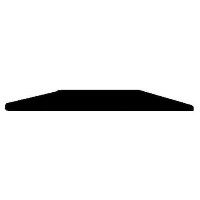
2-Bevel Scale
A 2-bevel scale provides fewer scales on a flatter shape. It can be easier to read in some situations and is a good choice when you only need a limited number of graduations.
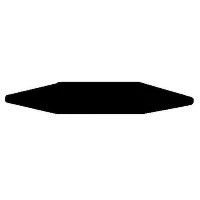
4-Bevel Scale
A 4-bevel scale offers multiple graduations in one tool while improving visibility through beveled edges, making it useful for frequent detail work.
How to Use a Scale Ruler
Using a scale ruler correctly is mostly about choosing the right scale and reading it carefully. Once you get comfortable with the graduations, the process becomes much more natural.
- Select the correct scale for your drawing, such as 1/4" = 1'-0" or 1:50
- Find the correct side of the ruler
- Align the zero mark with your starting point
- Read the measurement where the line or object ends
- Draw or measure using that scale consistently throughout the drawing
- Double-check measurements, especially when switching scales
Why Color-Coded Furrows Can Help
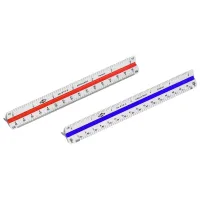
One feature that can make drafting scales easier to use is color-coded furrows. These colored channels help distinguish one scale from another so you can identify the correct graduation more quickly.
- Faster identification: easier to spot the right scale at a glance
- Better workflow: less stopping to double-check which side you are using
- Fewer mistakes: helpful when switching between scales on more complex drawings
For many users, color-coded furrows are a small feature that saves a surprising amount of time.
Tips for Using Drafting Scales Effectively
Label the Drawing Scale
Always note the scale used on the drawing so other people, and future you, know what they are looking at.
Practice Common Conversions
Getting comfortable with popular scales makes drafting faster and reduces hesitation during layout work.
Use a Scale Guard
A scale guard can help lift and maneuver the scale while keeping graduations oriented correctly.
Keep the Scale Clean
Smudges, wear, and grime can make graduations harder to read and create avoidable measurement errors.
How to Know Which Drafting Scale You Need
If you work in architecture, start with an architect scale. If you work in engineering or site planning, start with an engineer scale. If you use metric measurements, choose a metric scale. If your work crosses more than one system, a combination scale or drafting fan may make more sense.
For students, the Alvin 110P architectural scale and Alvin 111P engineering scale are common choices. For professionals and long-term use, aluminum scales are usually worth the upgrade.
The right drafting scale is the one that matches your most common projects and helps you work accurately without having to second-guess the graduations every few minutes.
Shop Drafting Scales and Scale Rulers
Whether you need architect scales, engineer scales, metric scales, combination scales, or specialty drafting rulers, the right scale can make your work more accurate and more efficient.
Browse all drafting scales | Shop architect scales | Shop engineer scales
Drafting Tips, Guides & Resources